
How “rubbish” can help trace your property’s history
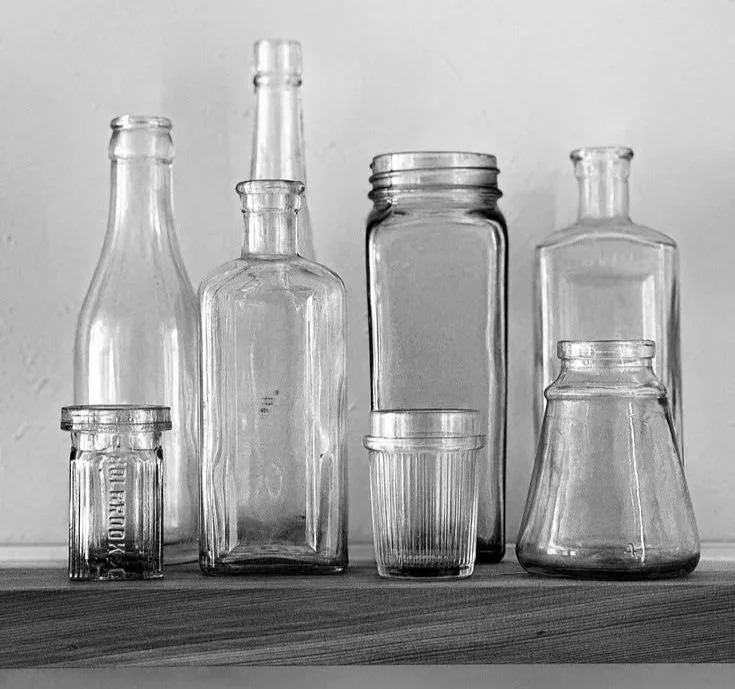
When making big changes to your home or garden, it is very common to find objects, or fragments of objects, left by previous owners. It is easy to dismiss these objects as rubbish, but they can provide powerful insights into the history of your property and the people who lived on it. In this blog post I discuss some of the ways in which I use these items to complement my research of a house or property.
The above image is of several glass bottles that my family and I have found over the years on our property while gardening. It is rare to find bottles like these in such exquisite condition, but even incomplete objects like shards of glass or pottery/ceramics can reveal important insights. For example, besides revealing basic things like the tastes and preferences of previous owners, they can also reveal what brands and products were present in certain periods. Several of the glass bottles, for instance, were stamped with the name of the company that produced them. These can then be cross-referenced with newspaper/magazine advertisements for these products, which can help reveal what time your house was built. For example, if the earliest objects found on your property date to the 1920s, this can indicate that your home was built just before or during this period. But, because your home may not have been the first dwelling built on the property, this evidence must also be combined with other information, such as property records and the architectural style of your home, which can help confirm the date it was built. The key thing to remember is that these kind of objects can be used to complement the research of your house, but should not be used in isolation.
The materials that were used to build your home can also yield important insights. For example, when re-insulating a wall in our cottage, we found that the wall had originally been lined with apple packing crates and newspaper. Since Tasmania (and particularly the area where we live) is historically known for apple production, this situates our property strongly within the historical, social, and agricultural context of the region, and also suggests that the people who built the wall might have worked in the apple industry to have had access to these crates. It also indicates that the people who built our house were working class and made the best of what they had, using scrap material to line the walls of their home. Furthermore, examining the dates on the newspapers enabled us to date that part of the house.
Similarly, when my father was renovating a historic property, he found that some of the timber used to construct and line the walls was stamped with the name of the mill that produced them. By researching when the mill operated, it was then possible to date that part of the home to that era. However, it is important to note that many homes were built/renovated/expanded over different eras as the occupants’ needs and families evolved and grew, and when they could save enough money to make these changes. Therefore, evidence like this must be taken as a guide only, and combined with other sources.
I hope you have enjoyed this blog post.
Best wishes,
Liliana