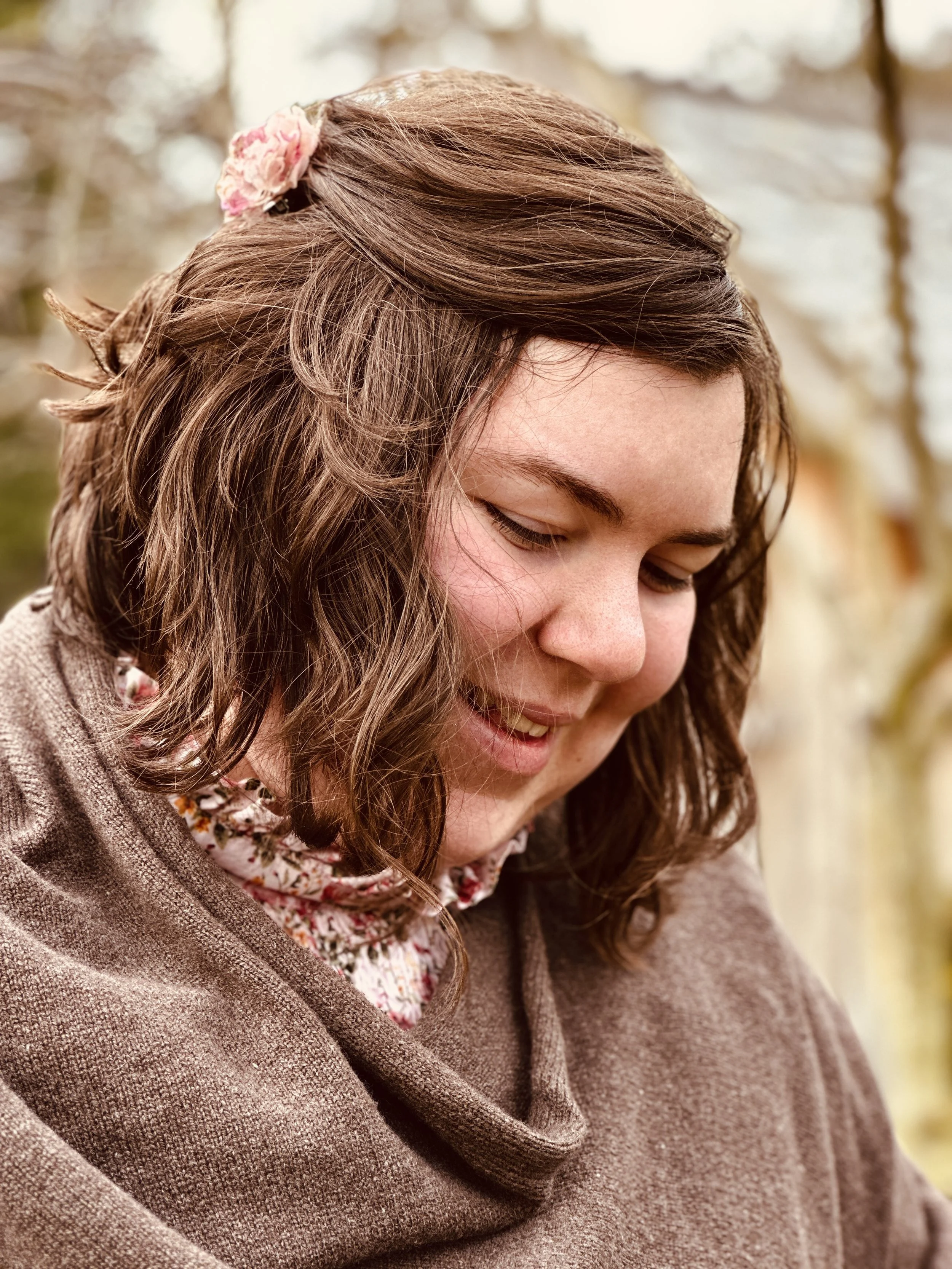
I'm Liliana Van Heel, a professional historian, genealogist and family historian who is passionate about uncovering the forgotten stories of people and places from the past.
I became a historian because I feel it is so important to honour those who have come before us - remembering our ancestors is one of the greatest gifts we can give both them and ourselves.
Every family is unique, with their own unique history and traditions. I hope that I can help you discover the many amazing stories I'm sure your family tree or research project has to offer.
Qualifications
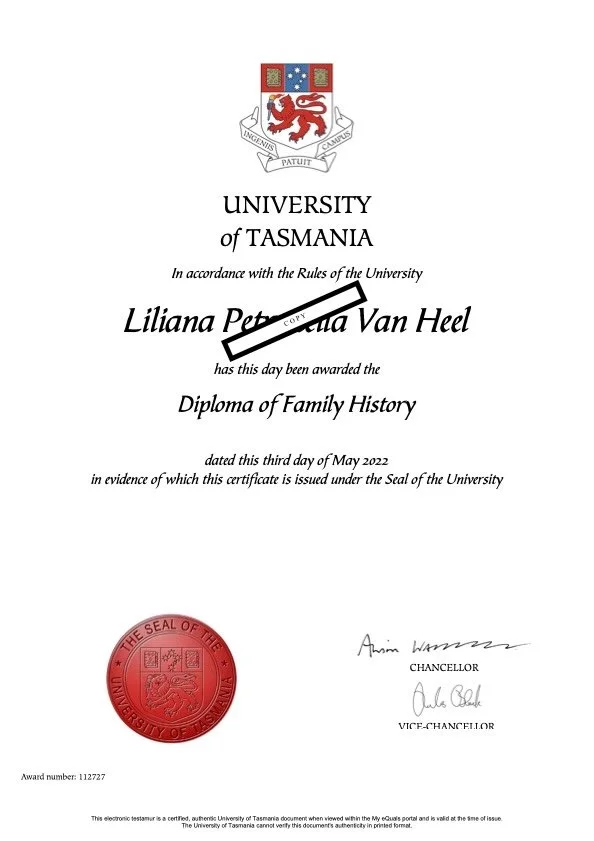
I hold a Bachelor of Arts in History from the University of Tasmania, and a Diploma of Family History from the University of Tasmania.
Throughout both the degree and the diploma I studied a wide range of subjects and consistently received positive feedback from lecturers on my strong research skills, attention to detail, and precise referencing. It was also an honour to receive in 2025 the Kay Daniels Prize in Social History from the University of Tasmania, which is awarded “to the student enrolled in a History unit at 200 or 300 level who submits a major assignment for assessment in the field of Social History which best exhibits the qualities that exemplified Kay Daniels' own work: imagination, intellectual clarity, rigorous research and broad humanistic concern” (Source: University of Tasmania, ‘Kay Daniels Prize in Social History’).
I was nominated twice for this award for my research on the depictions of gender in the Australian Women’s Weekly cookbooks during the 1970s and 1980s, and for my examination of the life and work of twelfth-century writer and abbess Heloise.
My research specialities as a family historian include (but are not limited to):
Australian family history since 1788, particularly immigration, convict, and Gold Rush era history.
The Australian WWI experience, including researching the service of Australian WWI soldiers.
Scottish family history and genealogy, including Scottish immigration to Australia.
Irish family history, including immigration to Australia.
Cornish family history and Cornish immigration to Australia, particularly Victoria.
Researching the history of Australian houses/properties and material culture.
My work as a family historian is focussed on multidisciplinary research, drawing information from a vast range of sources to provide the fullest picture of your family history on both a micro and macro level. For example, when researching family history, I don’t just look for birth, death, and marriage (BDM) records. Instead, I research a broad range of sources, including BDM records, newspapers, gazettes, photographs, land records, censuses, electoral rolls, military records, oral histories, legal records, and will and probate records.
I also research the broader historical context of your ancestor’s lives, making sure to question what might have been happening at the time and/or place your ancestors lived - researching not just what they did, but also what local and global factors may have shaped their lives. For example, when researching a Scottish person who immigrated to Australia during the 1850s, I research both their actual immigration records, and what was happening in Scotland and Australia during this period that may have influenced their decision to immigrate. Together, these two strands of research reveal powerful insights into the choices and influences that shaped our ancestors’ lives.
My research specialities as a historian include (but are not limited to):
Australian history and society from 1788-1990, particularly Australia’s settler-colonial history.
The ethical management and preservation of history and cultural heritage.
The roles and places of women and the feminine in ancient Greek and Roman society, culture, mythology, epic, and literature.
Ancient Greek and Roman mythology and literature, including Homeric and Roman epics such as the Iliad, the Odyssey, and the Aeneid.
The role of theatre, performance, and comedic and tragic plays in the ancient Greek and Roman world.
Early Medieval Europe and the British Isles (300-1000 AD), with a focus on what archaeological objects and hoards can reveal about early medieval society, culture, trade, and religion.
Medieval Europe 1000-1450 AD (also known as the “High Middle Ages”) particularly the lives of women during this period.
The culture and society of Renaissance Italy, particularly the places and roles of women in Renaissance society.
The witch-hunts of Early Modern Europe.
How the history of food and eating can be used to better understand social history and gender history.