
Tips for organising family history research
Note: This blog post was originally written in 2019. Due to switching website providers, I am updating and reposting all of my blog posts.
Hello everyone,
One of the most important parts of family history research is keeping your facts and research material organised. Here are five tips to help make this research organisation easier:
1. Save immediately:
When I find a record, certificate or fact about an ancestor that I am sure is correct, I immediately add it to my ancestor’s online profile, create profiles for any new family tree members, and add any images/certificates to their gallery. This prevents me from losing any information, and also makes it easier to see the most updated facts for that person while continuing my research. If I’m not sure if a piece of information is correct, I either write it down in my family history notebook (along with where the information is from), bookmark/save the link online, or (if I am using ancestry.com) save the record to my shoebox.
2. Keep browser tabs tidy:
When I know that I am finished with a certain tab on my computer, I immediately delete it so it does not clog up my browser, slow down my computer or make it difficult to cross reference material. If the information is a useful resource, I bookmark it to come back to later. For significant resources that I use regularly or don’t want to forget about, I make them into a “pinned tab” in my browser so they are always accessible. Every few months, I go through all of these pinned tabs and ask myself Do I still need this? Is this information still relevant? Am I still using this resource? If the answer is no, I bookmark the website in case I need it again and remove the pinned tab.
3. Have your digital family tree open in a browser tab while researching, even if you are researching on the same platform that your family tree is stored on:
This means that you can quickly check/refer to your information while researching. It also avoids doubling up and makes it easier to remember which facts are correct.
4. Keep a family history notebook:
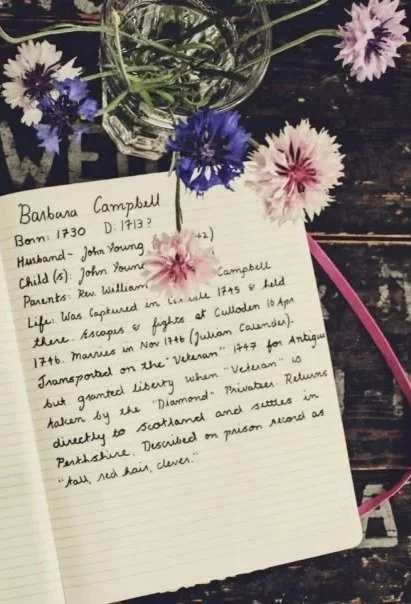
Keeping a notebook that is only used for your family research is very useful as it allows you to quickly jot down dates, facts and theories without having to remember them. If you are someone who researches your family tree on the go (e.g. on public transport to work or during lunch breaks), or if you are travelling, creating a word document on your computer titled “Family History Notebook” might work better for you to save space.
5. Keep a “Resources” list:
Keeping a list of all my family history resources is very helpful. I simply keep a list in my family history notebook of any websites, books and articles I found useful or that people have recommended. When I recently started a project on convicts, I was able to quickly refer to my resource list and pull up several websites that proved immensely useful. Again, if you are pressed for space, keeping a word/pages document for resources works really well.
Happy researching!
Liliana